
Insights from Athens: Fair MusE explores EU law’s impact on the music industry

On 10 March 2025, experts and professionals convened in Athens to discuss the role of EU law and policy in promoting fairness, transparency, and sustainability within the European music ecosystem, drawing insights from the Fair MusE project’s latest research findings.
The Hellenic Foundation for European & Foreign Policy (ELIAMEP) hosted on March 10, 2025, a closed event on “Shaping Fairness in the EU Music Ecosystem: The role of EU law and policy”. The event highlighted key findings from the Fair MusE project, regarding the ways in which EU law and policies can help shape a fairer, more transparent, and sustainable music ecosystem.
The event opened with a welcome address by Evangelia Psychogiopoulou, Assistant Professor at the University of the Peloponnese and Senior Research Fellow at ELIAMEP. Prof. Psychogiopoulou explained the overarching goal of the Fair MusE project to promote “fairness” in the European music ecosystem and to reach a better understanding of how this concept ought to be understood and operationalized in the wake of digitalization and the dominance of online platforms, with a focus on transparency, competition and sustainability. She also presented the different research strands of Fair MusE drawing on interdisciplinary analysis through law, political science, economics, and computers and data science, and informed on the purpose of the event, namely, to shed light on and discuss key project findings regarding fairness in EU copyright law and policy, and broader EU action addressing the music sector, with experts and professionals.
Prof. Giuseppe Mazziotti delivered an intervention titled “Music, Data, and Power: The Role of EU Law in Protecting Creators’ Rights,” in which he explored key provisions of the EU’s Digital Single Market (DSM) Directive (2019/790). His presentation focused on Article 17, which addresses liability for online content-sharing platforms; Article 18, which deals with fair remuneration for authors and performers; and Article 19, which introduces transparency obligations. More information about his intervention is available here.
Eirini Volikou (UTARTU & UCP), continued with the presentation of key findings from the Fair MusE study on “The Role of EU Platform Regulation and Competition Law in Enhancing Fairness on Digital Music Markets”, co-authored with Marta Cantero Gamito (UTARTU), Gil Dagan, and Maria José Schmidt-Kessen (CEU).
The presentation focused on the potential of legal instruments, mainly EU and national competition rules and selected provisions from the Digital Services Act (DSA) and the Digital Markets Act (DMA), in supporting music authors’ and performers’ rights to fair remuneration and transparency regarding the digital exploitation of their works . Volikou discussed the advantages and the limitations of the application of each of these legal instruments alongside the rights established for authors and performers under the 2019 DSM Directive and drew conclusions about which among these instruments present the most viable options in the arsenal of artists and their representatives.
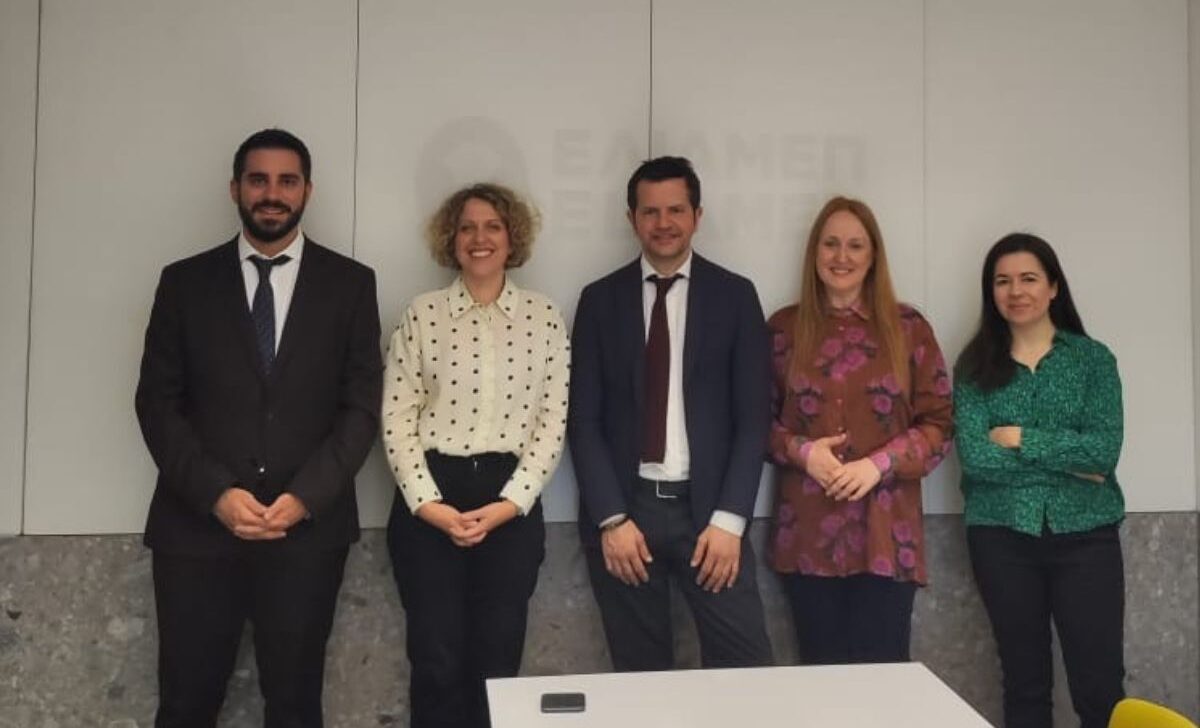
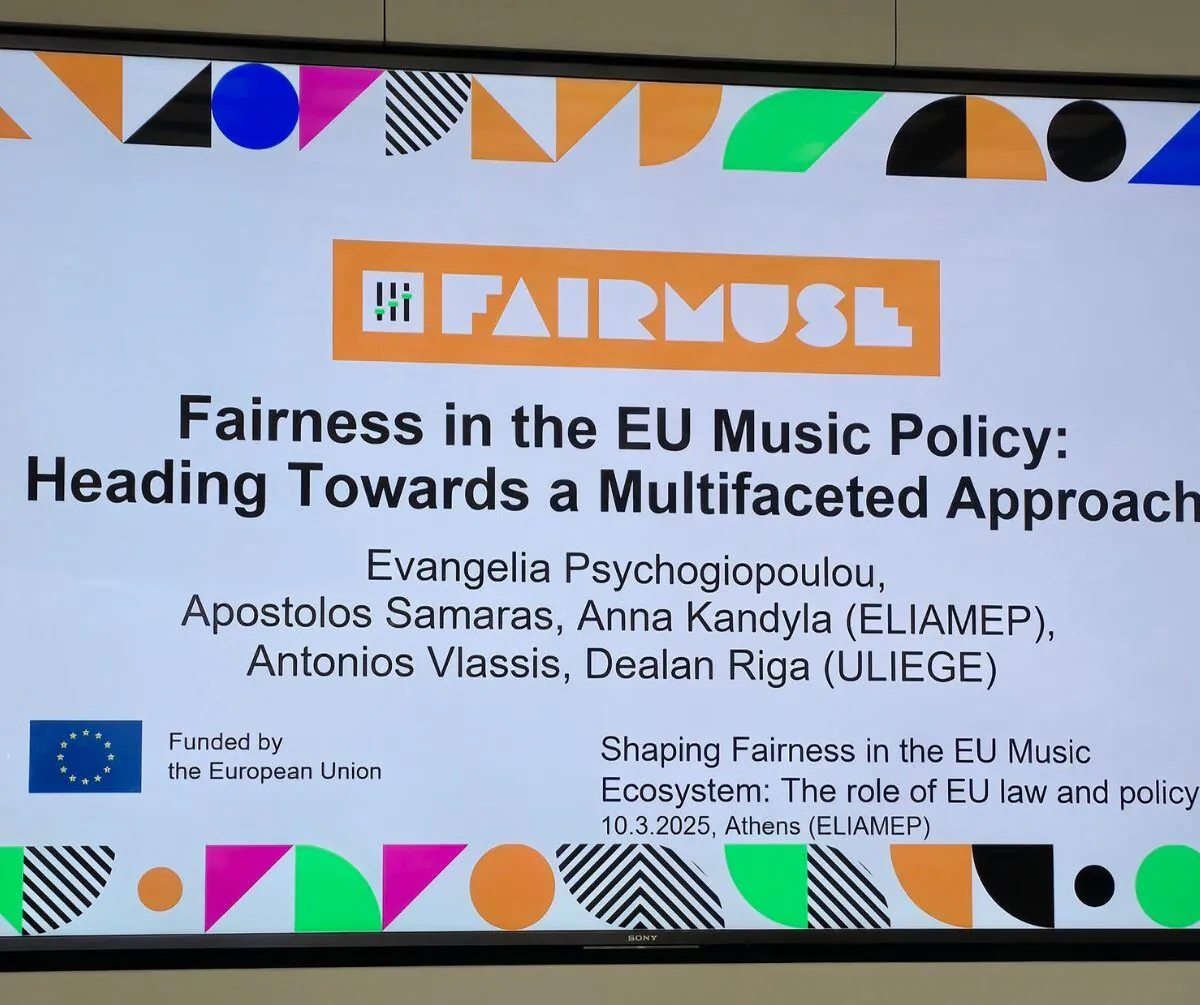
The event concluded with a presentation by ELIAMEP researchers Dr Apostolos Samaras and Dr Anna Kandyla, titled “Fairness in the EU Music Policy: Heading Towards a Multifaceted Approach”. Their presentation highlighted key findings from the Fair MusE report, “Origins, goals, and effects of EU Law and policy in the online music sector”, they co-authored with Antonios Vlassis (ULIEGE), Evangelia Psychogiopoulou (ELIAMEP) and and Dealan Riga (ULIEGE).
Dr Samaras and Dr Kandyla presented the methodology employed in a diachronic analysis of 121 legal and policy instruments from key EU institutions, aimed at tracing the concept of “fairness” within EU policy and regulatory discourse, and funding rationale, over the past three decades. Dr Samaras emphasized how EU copyright law has progressively evolved since the 1990s, and how it has sought to balance different rights and interests of rightholders with user access, incorporating fairness as a regulatory objective, with the adoption of EU legislative acts such as Directives 2001/29, 2014/26 (collective rights management) and the 2019 DSM Directive . More recently, the EU has expanded its approach to fairness by introducing platform regulations, like the above-mentioned DSA and DMA, seeking to address the evolving challenges of the online environment. Dr Kandyla discussed the Commission’s approach to fairness which encompasses considerations of balancing between rights, of undistorted competition, and of fair pay and platform work. The European Parliament has stressed the relevance of fair competition, rightholders’ fair remuneration, and fairness in the pursuit of public goals. Along with creators’ fair remuneration, the Council of the EU has also emphasized platform transparency and fairness as a principle of EU action. According to the analysis carried out, the concept of fairness has gradually become part of a broader legal and policy framework dealing with the governance of digital platforms. From this perspective, EU law and policy for the music sector now extends well beyond copyright.
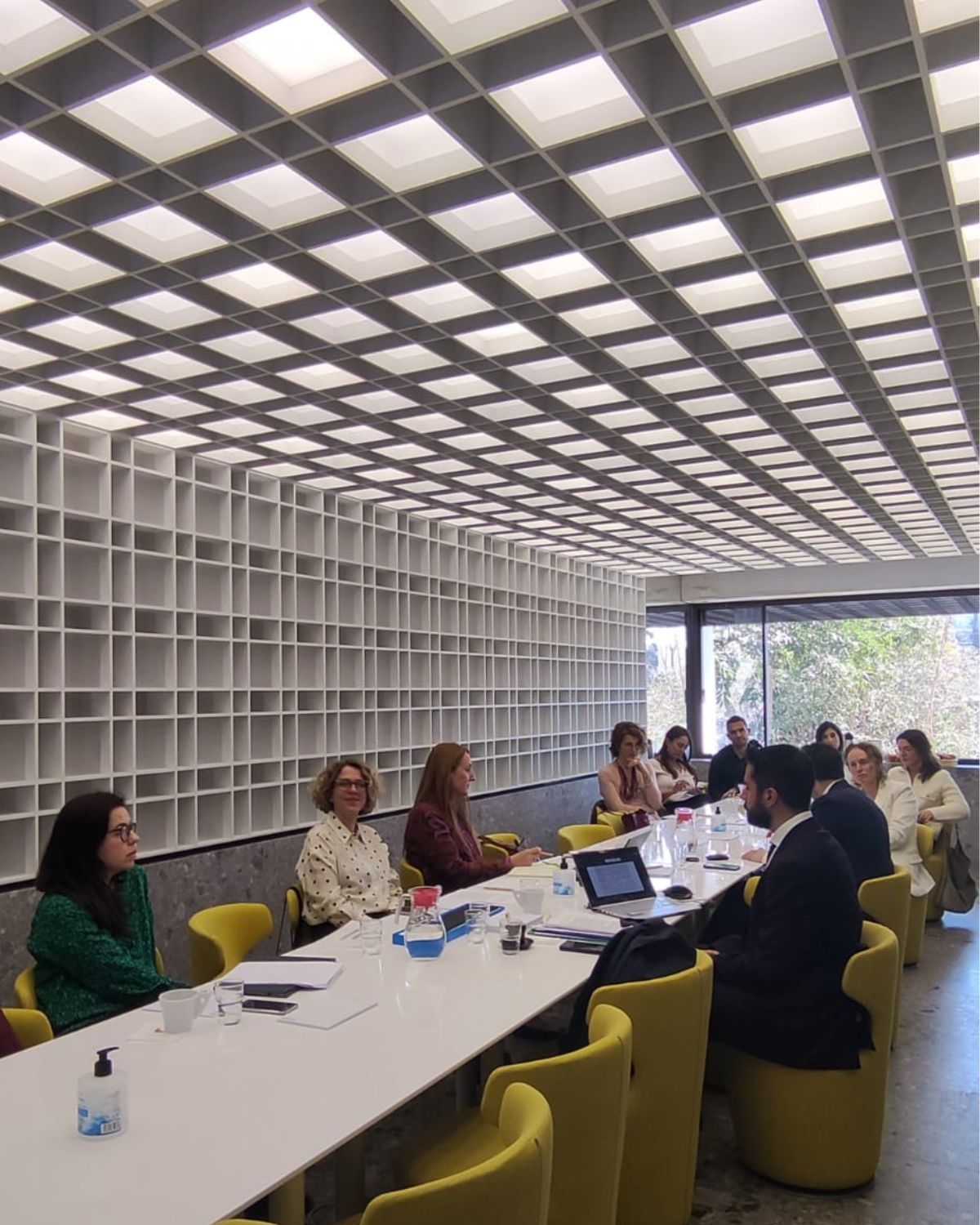
Given the active participation of high-level Greek experts in the field of music copyright (including former government officials) and of artists’ advocates representing Greece’s collective rights management organisations, ELIAMEP’s event provided an exceptional opportunity for insightful discussions and an open exchange of knowledge and views highlighting how the European music ecosystem can improve in terms of data transparency and, therefore, artists’ awareness and overall remuneration.