
Reimagining fairness and innovation: reflections from Fair MusE’s economics and business workshop

Held on 7 February 2025 at the Fondation Universitaire Stichting in Brussels, Fair MusE’s Economics and Business Workshop provided a timely and critical forum to explore how digital platforms are reshaping value, visibility, and fairness in the music industry. Bringing together leading researchers and an engaged audience, the workshop offered key insights into the perceptions of industry professionals, the structure of platform-driven business models, and the evolving demands for equitable and transparent practices in a data-dominated ecosystem
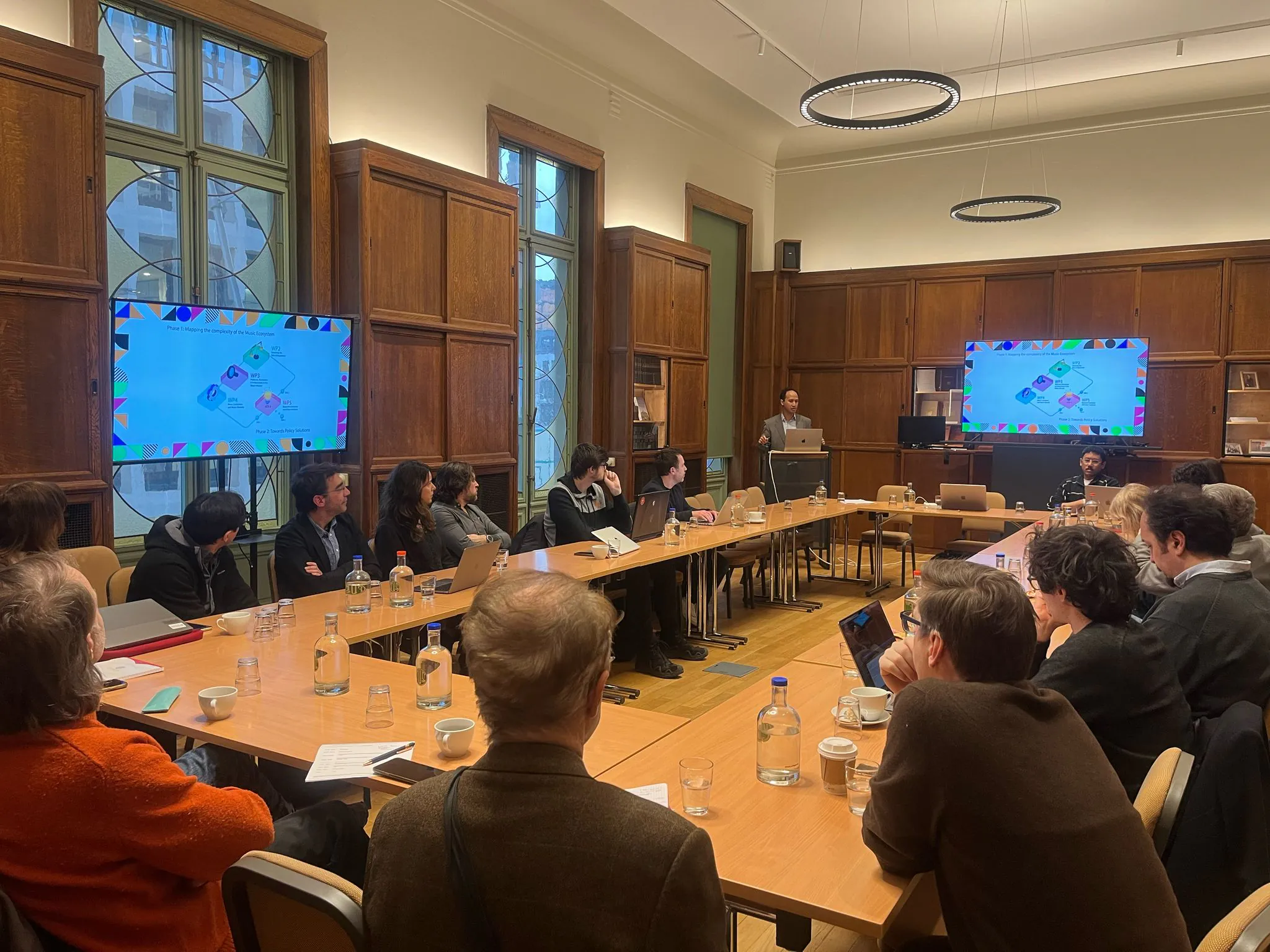
On Friday, 7 February 2025, the Fair MusE project successfully hosted an insightful workshop at Fondation Universitaire Stichting in Brussels. Centred on the theme of ‘Platforms, Businesses and Professionals in the Music Industry,’ the workshop featured valuable insights into the evolving dynamics of the music industry, perceptions among key European music professionals, and innovative business models that shape the future of music. Each insight was presented by Fair MusE researchers, followed by interactive Q&A sessions in which participants raised questions that sparked critical reflection and dynamic discussions about the transformative impacts of digitalisation on music creators’ practices and fairness, stakeholder perceptions of fairness and the implications of innovative business models within a reconfigured music ecosystem.
The workshop began with an introduction by Heritiana Ranaivoson, leader of Work Package 3 (WP3) and Professor at Vrije Universiteit Brussel. In his opening remarks, he highlighted Fair MusE’s mission to promote fairness in the European music industry by emphasising the significant impacts of algorithms, data collection and platform-driven exploitation models on music creators and audiences alike. Additionally, he outlined WP3’s goal of broadening and deepening understanding of the music industry’s supply side—from music creators to traditional intermediaries and online platforms—and underscored the importance of data as critical economic assets amidst platform dominance.
Following the introduction, Valdy Wiratama (Vrije Universiteit Brussel) opened the first session by presenting detailed findings from the project’s recent report on how music streaming services (MSS) have reconfigured the value networks for recorded music. Central to the findings was the expectation that music creators must adapt—encompassing performing artists, songwriters and producers—to tailor both their creative outputs and promotional approaches closely to streaming services’ business logics. Several critical transformations emerged from this, including the dual impact of digitalisation, incumbent stakeholders strategically redefining their roles through strategies like acquisitions and the consumption shift towards algorithmically curated listening experiences.
Moreover, the findings from the first session also illuminated the complex nature of fairness within the music ecosystem by highlighting the role of algorithms in influencing exposure and remuneration. This critical perspective sparked active discussions during the session’s Q&A, where participants further explored intricate challenges of fairness related to streaming fraud and raised critical questions about how radio fits into the broader ecosystem.

Continuing the exploration of fairness, Antonios Vlassis and Marina Rossato Fernandes (University of Liège) presented the second session by sharing findings from their ongoing research into the perspectives of music industry professionals towards fairness. Reflecting the industry’s growing focus on fair practices amid digital transformations, the promotion of fairness has gained prominence in the music industry, driven by the heightened reliance on digital music platforms, including music streaming services, and was further accentuated by the COVID-19 pandemic. Recognising this increased reliance, the study addresses a critical gap—namely, highlighting understandings of fairness among music professionals and music business stakeholders in Europe in light of the evolving technological architecture.
Furthermore, the study adopts a political sociology approach, which seeks to examine fairness as a dynamic and context-dependent concept. This concept is negotiated and debated among diverse stakeholders who have competing logics and priorities. Through a mixed-method approach based on an online survey and interview data, the study identifies remuneration, transparency and diversity as central dimensions connected to fairness. The findings reveal that the notion of fairness extends beyond economic concerns and is significantly influenced by stakeholders’ value orientations.
Having established the nuanced perceptions of fairness among stakeholders, the third session offered a detailed practical examination presented by Adelaida Afilipoaie (Vrije Universiteit Brussel). The analysis focused on the innovative business models in and around the music sector of more than 30 companies and was complemented by a brief examination of the six in-depth business model analyses of Spotify, YouTube, Apple Music, SoundCloud, TikTok and Amazon Music. By adopting an ecosystem approach to explore the intricacies of the activities, the first half of the presentation showcased the recorded music industry as an organised as a network of interdependent entities that cooperate, compete, and create both economic (e.g., monetary) and non-economic value (e.g., convenience, user experience). The presentation underlined the continuous and rapid transformation of the music industry, showcasing the new players carving their way into the industry, the various emerging business models with their revenue streams, experimentation taking place with user engagement strategies, the capitalisation on the ‘superfans’ and the gamification of music.
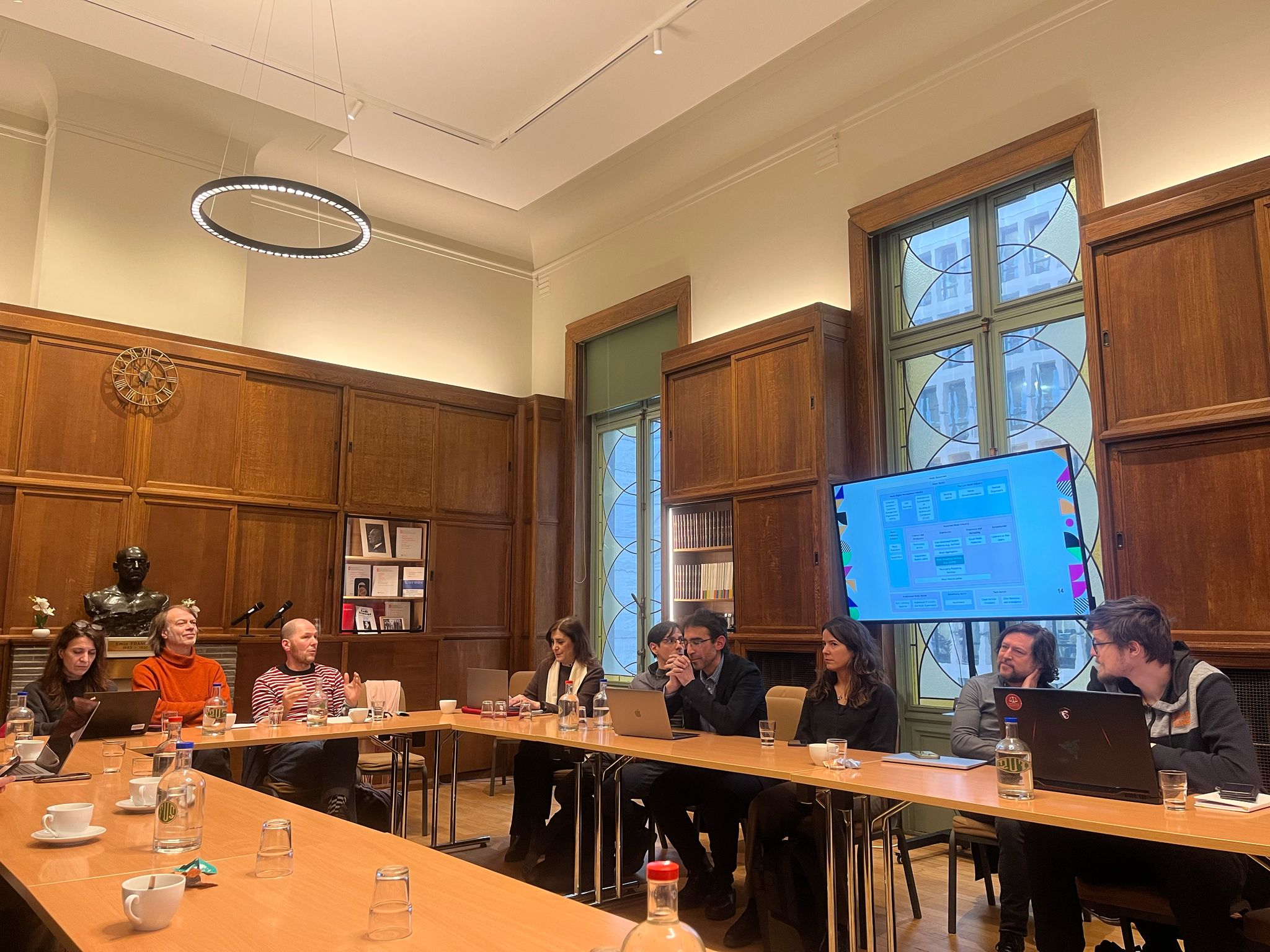
The second half of the presentation critically discussed the reconfigured music ecosystem which revolves around distribution, facilitated particularly by music streaming services and user-generated content platforms (video-sharing platforms and social media). It emphasized the challenge of oversaturation by highlighting that, with over 200 million tracks available, it becomes harder for any single artist to stand out, resulting in visibility and discoverability being heavily influenced by playlist curation and recommendation algorithms. Although the ecosystem theoretically operates as a ‘well-oiled machine’, in practice, it remains at times unbalanced, with interactions among the stakeholders being sometimes poor. This is exemplified through some of the highlighted issues, including streaming fraud, inaccurate metadata and the criticism that certain online platforms profit from music without fairly compensating for it—issues also underlined by the expert audience of the workshop during the session’s Q&A portion. As for the future implications, the session concluded with key takeaways on rethinking the royalty distribution splits, highlighting the flexibility, transparency and hybrid business models, as well as urging a joint effort to ensure metadata accuracy to effectively track music usage and ensure fair payouts to right-holders.
In conclusion, the economics and business workshop from Fair MusE facilitated rich and critical dialogue about the critical issues faced by the contemporary music industry, particularly the evolving role of digital platforms and the multifaceted concept of fairness. The workshop underscored the urgent need to reconcile technological innovation with equitable practices, highlighting the impact of algorithms on visibility and remuneration, the critical dimensions of transparency and diversity among industry stakeholders, as well as the importance of innovative business models and accurate metadata management for addressing oversaturation and discoverability challenges. With these considerations in mind, participants and speakers agreed that achieving fairness demands collective action, continuous dialogue among stakeholders, and an adaptive approach to policymaking and industry practices.